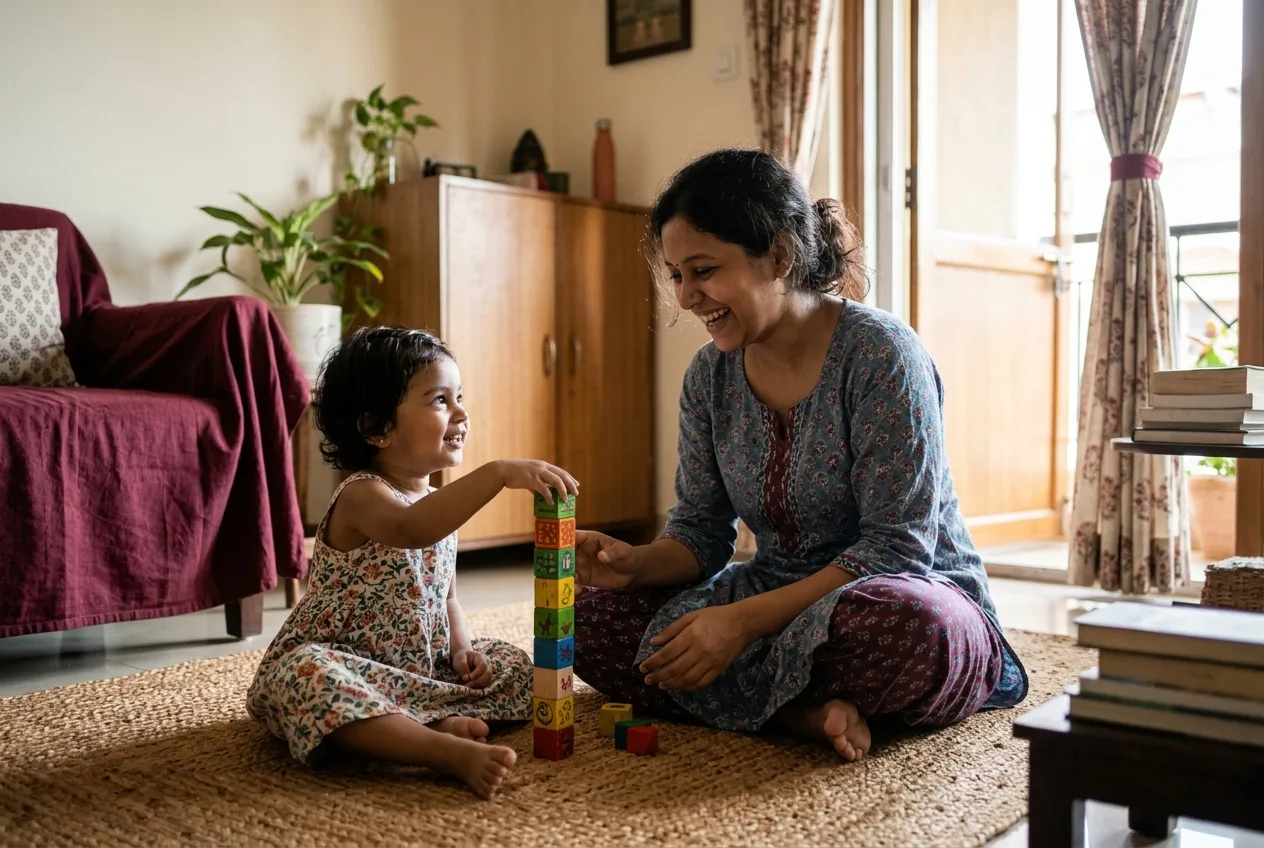
Highest-Priority Actions for Little kids, 1 to 5
If you only do five things in this stage, do these.
No screens under 2
From 2 to 5, under 1 hour a day, watched together.
Calm discipline, no smacking
Praise what they did right. Short time-outs. Same rules from grandparents.
Childproof against drowning and poisoning
Cover water tanks and buckets. Lock away medicines, kerosene and pesticides.
MR-2 and booster vaccines
MR-2, DPT booster, polio booster and JE-2.
Autism and development check
A short checklist at 18 and 24 months.
Every Step by Timeline Order
First dentist visit
Then fluoride toothpaste: a smear under 3, pea-size from 3.
No screens under 2
From 2 to 5, under 1 hour a day, watched together.
Read aloud every day
Ask questions about the pictures as you read.
Calm discipline, no smacking
Praise what they did right. Short time-outs. Same rules from grandparents.
Deworming and vitamin A every 6 months
Free at Anganwadi and on National Deworming Day.
Childproof against drowning and poisoning
Cover water tanks and buckets. Lock away medicines, kerosene and pesticides.
Choking hazards: no whole nuts, grapes or popcorn
Quarter grapes, grind nuts, sit while eating.
Two-wheeler rides: helmet and harness
Ages 9 months to 4 need a helmet and a safety harness. Ride at 40 km/h or less.
Name a guardian in your will
Who raises your child if both parents die.
If your child looks thin, get the arm measured
A simple tape around the upper arm. Under 11.5 cm needs help this week.
No sugary drinks, no sweets as rewards
Water and milk to drink. Whole fruit, not juice.
MR-2 and booster vaccines
MR-2, DPT booster, polio booster and JE-2.
Autism and development check
A short checklist at 18 and 24 months.
Toilet training when they are ready
Usually between 18 and 30 months. Watch for the signs.
Name the feeling, then guide the behaviour
"You are angry because the tower fell. You can't throw blocks."
Vision and hearing check before school
A simple check at a clinic or school camp.
Choose a play-based preschool
Kind teachers, small groups, safe building. Class 1 starts at 6.
What Elders Suggest vs What Medicine Says
We honor caring tradition while keeping mothers and children medically safe.
Kajal or surma on the baby
Traditional / NeutralCan contain lead and cause eye infections.
Ear piercing
Traditional / NeutralFine with sterile technique.
Mundan
Traditional / NeutralCulturally fine. 'Thicker hair afterwards' is a myth.
Baby walkers
Traditional / NeutralCause injuries and delay walking.
Teething gels with benzocaine, amber necklaces
Traditional / NeutralRisk of a blood disorder and strangulation.
Cold sponging or alcohol rubs for fever
Traditional / NeutralUse paracetamol by weight and fluids, on advice.
Honey for cough (over age 1)
Safe & EncouragedHoney reduces cough. Never under 1 year.
Cough and cold syrups under age 4
Traditional / NeutralNot recommended.
Ghee in complementary food
Safe & EncouragedGood energy in moderation.
Star charts and calm time-outs
Safe & EncouragedThe core of proven parenting programmes.
Spanking
Traditional / NeutralWorse behaviour over time. Banned in schools under RTE.
Sleep training
Safe & EncouragedNo harm found at age 5.
Haldi doodh
Traditional / NeutralFine. Buy turmeric from a trusted source; some is adulterated with lead.